The green film on your siding is a living organism, not dirt — which is why scrubbing and rinsing don't work for long. Killing it takes a diluted sodium hypochlorite solution with a surfactant, applied at low pressure and left to dwell for five to ten minutes before rinsing. Do that and you get eighteen months. Blast it off with pressure and you get about eight weeks.
Below: what the green actually is, why it keeps returning, the solution that works, the method step by step, mix strength by siding type, and the four free things that double the time before it comes back.
What the green stuff actually is
Mostly it's green algae — commonly Trentepohlia and related species — along with mildew and, on north-facing walls, sometimes a thin layer of moss or lichen at the base.
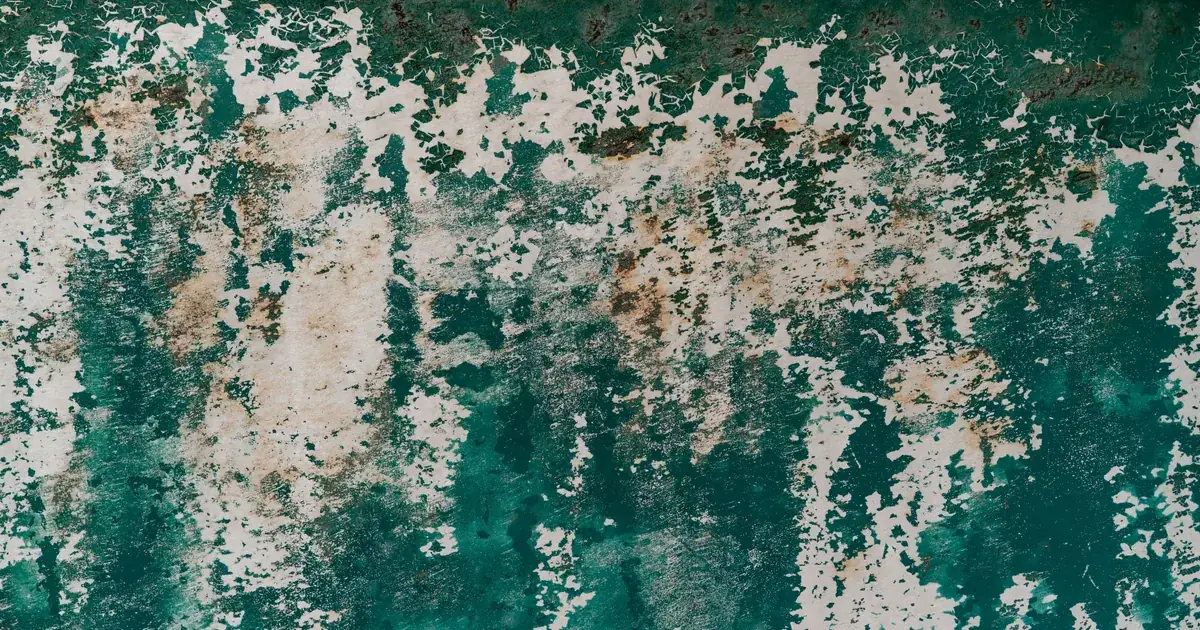
The key fact is that it's alive and it has structure. What you see as a flat green film has a root-like holdfast sitting down in the pores of your stucco, the texture of your vinyl, or the grain of your painted wood. The visible green is roughly the top third of the organism.
The black streaking higher up — usually on the roof and upper walls — is a different organism: gloeocapsa magma, a cyanobacteria. Same principle, tougher sheath, and it's what makes roof cleaning a separate job.
Florida is ideal for all of it. Warmth, humidity and shade, with no hard winter to reset the cycle.
Why it keeps coming back
Because most cleaning only removes the visible part.
A pressure washer, a stiff brush, or a hose knocks the top layer off. The wall looks clean. The holdfast is still in the pore, and it's now had a thorough watering. In Jacksonville humidity the visible film is back within two to three months, and often faster on a shaded elevation.
Three other things drive fast regrowth, and they're the ones worth checking:
- Sprinklers hitting the wall. Creates a permanently damp band at the base of the siding — plus iron staining if you're on well water.
- Shrubs planted tight against the house. Blocks air movement, holds humidity against the wall.
- Blocked gutters. Overflow runs down the wall after every rain.
The solution that works
Two ingredients. There's no proprietary magic in this trade, whatever anyone tells you.
- Sodium hypochlorite, diluted to roughly 1–2% at the surface for most siding. Same active ingredient as household bleach, at a comparable strength by the time it reaches your wall. This does the killing.
- A surfactant — a soap. Breaks surface tension so the solution penetrates the pore rather than beading, and thickens the mix so it clings to a vertical wall long enough to work instead of running to the ground in ten seconds.
Without the surfactant, the hypochlorite runs off before it can do anything. That's the single most common reason a DIY attempt underperforms — people use bleach straight and wonder why the wall is only patchily better.
What doesn't work: vinegar (lightens the surface, doesn't kill the root, acidic enough to dull some paints), pressure alone (see above), and most supermarket "outdoor cleaner" sprays, which are too dilute for an entire house and cost more per square foot than hiring someone.
The method, step by step
- Soak every plant, shrub and section of lawn inside the spray zone with clean water. This is not optional — it's what stops the diluted solution being absorbed. The pore space is already full of clean water.
- Check windows and doors are shut, and note any that already leak.
- Work in sections of roughly 10–15 feet, bottom to top. Applying upward prevents clean streaks running down dirty wall, which show later.
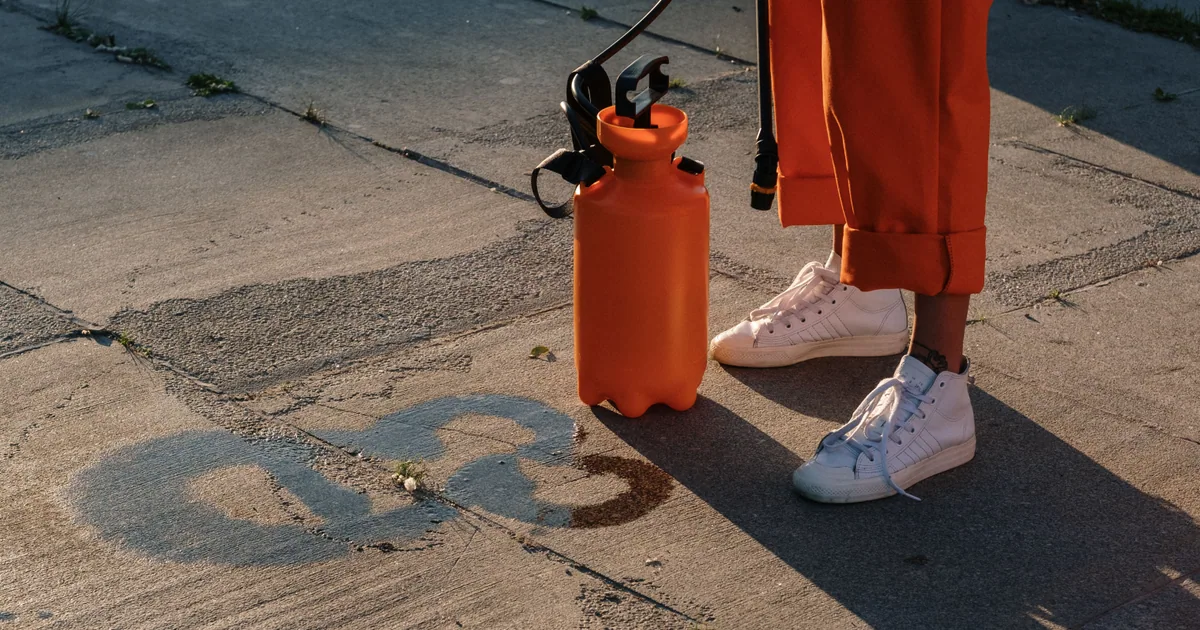
- Apply at low pressure — under 500 PSI, or a pump sprayer. You are wetting the wall, not blasting it.
- Dwell five to ten minutes. Watch it: the green will visibly lighten. Critically, don't let it dry on the surface — re-wet if it starts to.
- Rinse top-down at low pressure, plenty of water, until the runoff is clear.
- Rinse the planting again and hose down the driveway so runoff doesn't dry and mark.
Second application: heavy black staining sometimes needs one. Better a second gentle pass than a stronger mix.
Mix strength by siding type
This is where jobs go wrong. One strength across a whole house either fails to clean the brick or damages the paintwork — a real risk on mixed-material Mandarin homes.
| Siding | Strength | Pressure | Watch for |
|---|---|---|---|
| Vinyl | 1 – 2% | Under 500 PSI | Water driven behind the panels |
| Stucco / Dryvit | 1% | Under 300 PSI | Hairline cracks letting water in |
| Hardie / fibre cement | 1 – 2% | Under 500 PSI | Sound paint only — spot-test |
| Brick | 2 – 3% | Under 800 PSI | Soft old mortar joints |
| Painted wood | 1% | Under 300 PSI | Chalking paint streaks badly |
| Aluminium (older) | 1% | Under 300 PSI | Oxidation streaking — common in Orange Park |
| Cedar shake | Wood-safe cleaner | 500 – 800 PSI | Furring the grain |
Keeping it off
Four things, and three of them are free. Together they typically double the time before regrowth is visible.
- Turn the sprinklers. Any head throwing water onto the siding should be adjusted. Five minutes, no cost, biggest single improvement.
- Cut planting back 18 inches from the wall. Air movement is what dries a wall.
- Clear the gutters. Especially under oak canopy, where they fill fast.
- Trim overhanging limbs. More sun and less debris on the wall below.
My honest take
House washing is the one exterior job I'd genuinely say a careful homeowner can do on a single-storey house. The chemistry isn't secret, the equipment is cheap, and the technique is forgiving as long as you pre-wet and don't reach for pressure.
Where I'd stop is two storeys. Not because the method changes, but because you're then working from a ladder with a hypochlorite mix overhead, in wind, and the risk isn't worth the $250 you'd save.
The other thing worth saying plainly: if a company quotes you a "power wash" for your siding and talks about PSI, they're offering you a two-month result. That's not always wrong — sometimes people genuinely just want it looking good for a viewing next week — but you should know that's what you're buying. Our soft wash vs pressure washing guide goes into the difference properly.
If you'd rather not do it yourself, our house washing service covers the whole of Jacksonville and the First Coast, or send us a photo for a fixed written price.